

rxuevi.over-blog.com/
27 Mars 2021

Photoscissors 6 14. GPT (GUID Partition Table) is a partition type for disks. When formatting Mac-formatted disks, such as HFS+ or HFS+J, in Disk Utility, current versions of the Mac OS typically use GPT as the default partition type.
GPT and MacDrive GPT (GUID Partition Table) is a partition type for disks. When formatting Mac-formatted disks, such as HFS+ or HFS+J, in Disk Utility, current versions of the Mac OS typically use GPT as the default partition type. Recovery Partition is a different portion of the computer and can be accessed while restoring or reinstalling the Mac operating system. While repairing or reinstalling the operating system of your Mac, the installation phase creates the recovery partition itself automatically. Resize Partition on Mac with Disk Utility. Mac Disk Utility is a powerful built-in application in Mac OS that has undergone a series of changes with every major OS update. Many Mac users have complained that using Mac Disk Utility to resize a Mac Volume is no longer easy. GPT drives have a much larger and size limits which depend mainly on operating systems and its files systems therefore GPT allows an unlimited amount of partitions. GPT drive can support 128 partitions on Windows OS or Mac OS X while MBR only supports four primary partitions. Now click the Erase tab. Adobe premiere pro 2014 mac download. Set the format to Mac OS Extended (Journaled) and the Scheme to GUID Partition Map. If you selected the drive name instead of its description you won't see the Scheme.
Fixed disks
MacDrive fully supports GPT partitioning for fixed disks. Fixed disks can include internal hard drives, but can also include portable devices such as external hard drives which connect via USB, FireWire, etc.
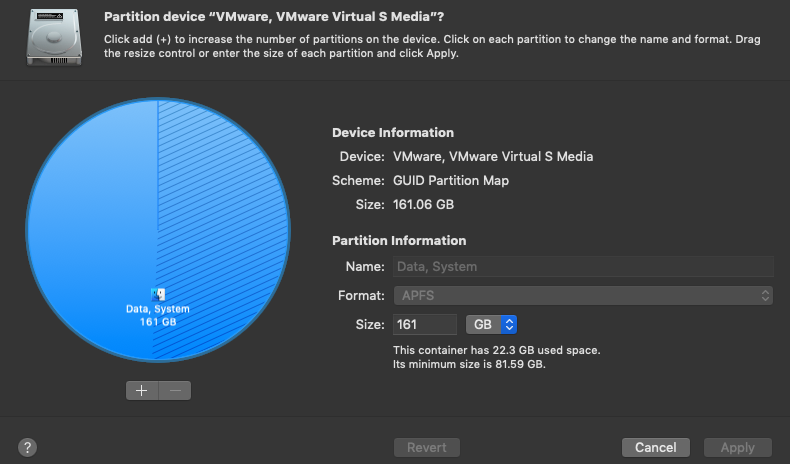
No additional software is needed to access a Mac-formatted disk that is GPT partitioned. You can simply connect the disk to your computer, and MacDrive will be able to access the disk and assign it a drive letter.
:max_bytes(150000):strip_icc()/005-apple-partition-types-a4c2e15af5be46f1951cc5902000544a.jpg "Mac Os Partition Type")
Removable devices
Quick search button. Removable devices, such as flash drives, cannot be GPT partitioned and work with MacDrive. This is because Windows does not currently support GPT removable devices of any kind, including those formatted NTFS, the most common Windows disk formatting type. A removable device can be identified as it will appear in the 'Devices with Removable Storage' area of when viewing available drives (‘Computer' in Windows 7/Vista, ‘My Computer' in XP).
MacDrive does, however, support Mac-formatted removables with the partition types of APM (Apple Partition Map) or MBR (Master Boot Record), either of which can be created with Disk Utility.
To create a removable drive that will work with MacDrive, you can use either Disk Utility or the MacDrive Disk Manager. Please make sure to migrate any data from the device as repartitioning it will erase all data.
Disk Utility
Open Disk Utility by opening 'Applications' from the Dock, and then 'Utilities'. Then, select Disk Utility. Connect the removable device in the left panel. Then, select 'Partition'.
Select the drop-down under 'Volume Scheme' to select the number of partitions you want (usually, one). Then, select the 'Options' button and select an alternate partition scheme, such as Apple Partition Map. Then, press OK, then Apply. You will be asked to confirm the change; press Partition to proceed.
MacDrive Disk Manager
Connect the device in question, then open 'Computer' or 'My Computer' to view connected devices. Right-click on the removable device and select 'Format Mac Disk', then select 'Modify Mac Volumes'. Select the device, and press 'Format Volume', then Format. The result will be a Mac-formatted removable device that can freely be used on Macs, or in Windows with MacDrive.


/image%2F6313767%2F20210221%2Fob_4e9d7f_android-usb-driver-for-mac.jpeg)
/image%2F6313767%2F20210221%2Fob_092cdf_mac-os-ios-download.jpeg)
/image%2F6313767%2F20210221%2Fob_eace80_mac-mini-os-x-el-capitan.jpeg)
/image%2F6313767%2F20210221%2Fob_4f9436_back-up-external-hard-drive-mac.jpeg)